Why Global Trade Has Never Been This Complicated
Why global trade has entered its most legally treacherous era, and what that means for everyone moving goods across borders.
For three decades, global trade operated on a comfortable illusion: that goods, money, and information could move freely across borders as long as the paperwork was right. That illusion is now over. The implications cut across every industry, every supply chain, and every company that touches an international transaction.
We are not living through a cyclical slowdown. We are witnessing a structural rewiring of the global trading order. At the centre of it, less visible than tariffs and less dramatic than wars but far more consequential for daily operations, is the quiet and relentless tightening of sanctions regimes and export control frameworks.
Most businesses still treat these as niche legal problems. They are not. They are the new trade architecture.
The Death of Frictionless Trade
The WTO era promised frictionless trade. Tariffs would fall. Borders would thin. Markets would integrate. And for a while, they did. But the post-2014 world, accelerated violently after 2022, told a very different story.
Russia’s invasion of Ukraine triggered the most sweeping Western sanctions package since the Second World War. The OFAC SDN list grew. The EU asset freeze expanded. The UK’s OFSI and the US BIS moved in lockstep with unprecedented coordination. Overnight, hundreds of shipping routes, financial channels, and commodity flows became legally treacherous. Not just for companies directly involved with Russia, but for any business anywhere in the global supply chain that had downstream exposure.
The freight forwarder in Mumbai booking a container from Rotterdam to Casablanca via Istanbul is no longer just a logistics professional. She is, whether she knows it or not, a compliance officer on the front line of one of the most complex regulatory environments in modern commercial history.
Export Controls: The Most Underestimated Trade Risk of Our Time
Ask a mid-sized manufacturer whether their product requires an export licence and there’s a reasonable chance they’ll say no. Ask them whether they’ve done a proper End-User Undertaking, checked the ECCN or ML classification, assessed catch-all controls under Article 4 of EU Regulation 2021/821, or evaluated ITAR applicability, and the silence tends to grow longer.
Export controls are no longer the exclusive domain of defence contractors and aerospace primes. The line between commercial and military technology, the so-called “dual-use” frontier, has blurred dramatically with the rise of advanced semiconductors, drone components, thermal imaging systems, precision machine tools, and AI-enabled hardware.
The US Entity List now includes hundreds of Chinese firms. Germany’s BAFA is issuing more licences and more refusals than at any point in the post-Cold War era. India, despite its strategic autonomy doctrine, is increasingly caught in the crossfire as a potential re-export conduit.
In this environment, the question is no longer just “Is this product controlled?” It is: “Who is the end-user? What is the end-use? And could this shipment, five links down the chain, end up in a weapons system we’d be embarrassed to explain?”
The legal exposure runs to debarment, civil penalties, and in serious cases, criminal prosecution. A freight forwarder that ships ML-classified goods without validating export authorisation is not a passive actor. It is a potential violator. Ignorance is not a defence. “Our customer told us it was fine” is not a defence.
The Supply Chain Story Nobody Is Telling Correctly
Every business publication has covered “de-risking,” “friend-shoring,” and “China+1” as strategic decisions. Most of them are framing it wrong.
Yes, companies are diversifying away from single-country dependence. Yes, Vietnam, India, Morocco, and Mexico are picking up manufacturing share. But the underreported driver of this diversification isn’t just geopolitical risk. It’s compliance risk. Companies are not just worried about another COVID-era port shutdown. They are worried about waking up to find that their Tier 3 supplier in Shenzhen is on a sanctions list, and that every shipment they’ve processed for the last two years is now under regulatory review.
The scramble to know your supply chain, really know it, down to raw material source and ultimate ownership structure, is no longer just good practice. In an increasing number of jurisdictions, it is the legal standard. The US Uyghur Forced Labor Prevention Act has already demonstrated what this looks like in practice: a presumption of guilt, with the importer bearing the burden of proof. This model will spread.
Maritime: The Sector That Can’t Hide
If there is one sector where the convergence of sanctions, export controls, and geopolitical risk is most brutally visible, it is maritime shipping. The ocean is, in a sense, the world’s most legible trade corridor. And right now, it is the most legally treacherous.
The shadow fleet phenomenon, vessels transacting Russian, Iranian, and Venezuelan crude outside Western financial and insurance systems, has forced every serious maritime operator to ask hard questions. Who owns the vessel I’m chartering? Who insures it? Is the AIS signal I’m looking at real, or has this ship been dark for 72 hours while it conducted a ship-to-ship transfer off the Malaysian coast?
These are not hypothetical compliance exercises. They are the operational reality of maritime trade in 2026. The consequences of getting them wrong, P&I club coverage denied, US correspondent banking access lost, vessel arrest, are severe enough to end companies.
So What Does This Actually Mean for You?
Whether you move containers, manufacture industrial components, source raw materials, provide trade finance, or operate a port, the narrowing of the global trade corridor affects you. Here is the blunt version.
Compliance is no longer a cost centre. It is a market access function. Companies that have invested in understanding sanctions and export controls are not just avoiding penalties. They are building the operational licences that will determine which corridors they can access, and which ones will be closed to them.
Your counterparties are now your liability. UBO screening, Restricted Party checks, and End-User Undertakings are not bureaucratic overhead. They are the minimum viable due diligence standard. Companies that rely on a once-a-year screening refresh are playing Russian roulette with their operating licences.
The rules are extraterritorial. US sanctions and export controls reach far beyond US persons and US territory. Any transaction touching the US financial system, even a dollar-denominated payment cleared in Singapore, carries US sanctions exposure. The geography of compliance has no borders.
The Opportunity Inside the Complexity
Here is what the pessimists miss: the same complexity that is closing corridors for the unprepared is opening corridors for the well-prepared.
When a European defence manufacturer needs a freight partner for dual-use cargo moving through multiple jurisdictions, they don’t just want the cheapest rate. They want a counterparty who won’t expose them to a BIS enforcement action. When a sovereign wealth fund evaluates a supply chain investment, regulatory risk is on the term sheet. Compliance expertise, genuine, operational, jurisdictionally sophisticated expertise, is a competitive moat. It is rare. It is valued. And in a world where the legal geography of trade is being redrawn every six months, it is becoming more valuable, not less.
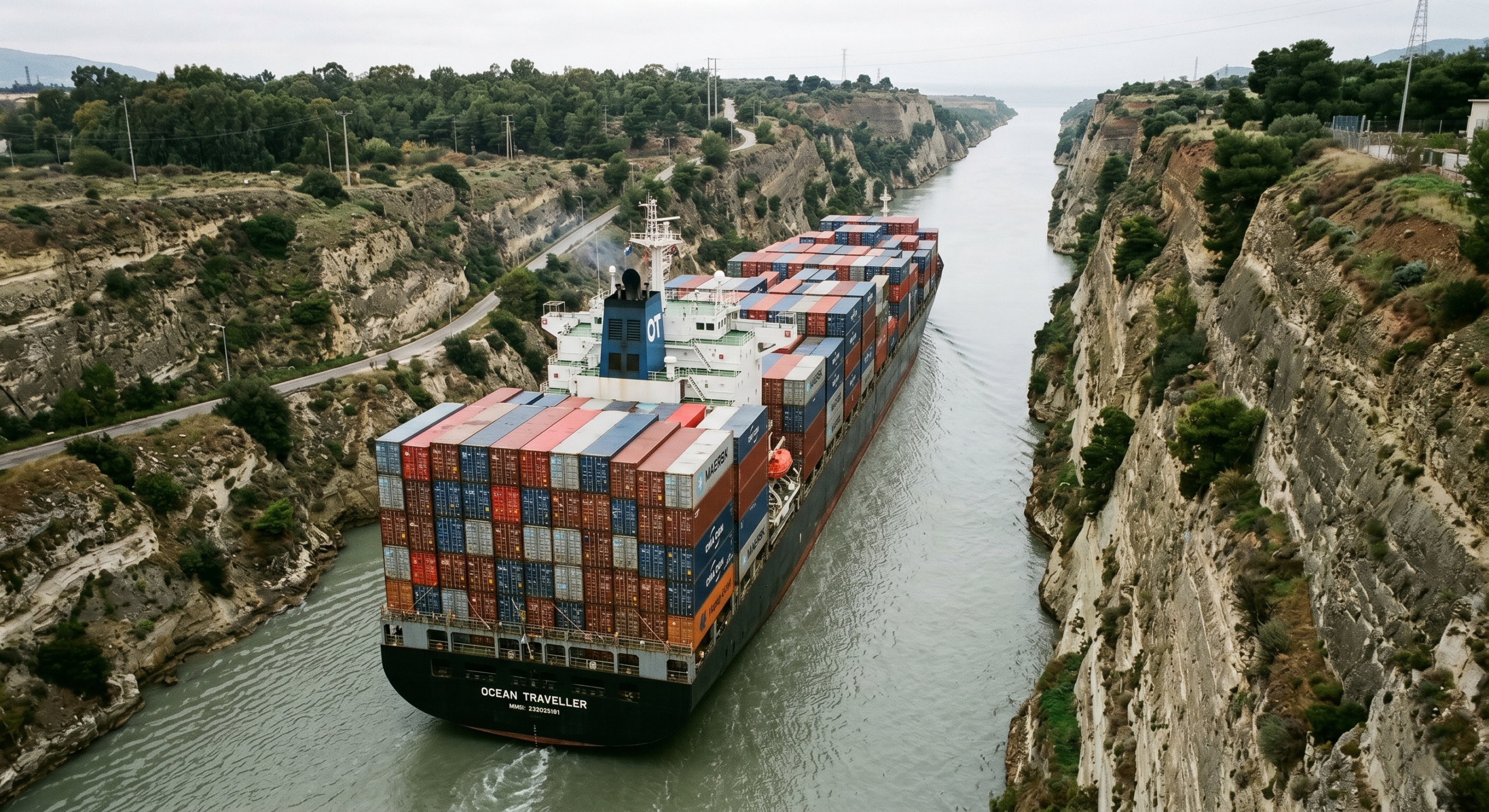
The corridor is narrowing. But for those who understand how to navigate it, there has never been a better time to be in trade.
Leave a Reply